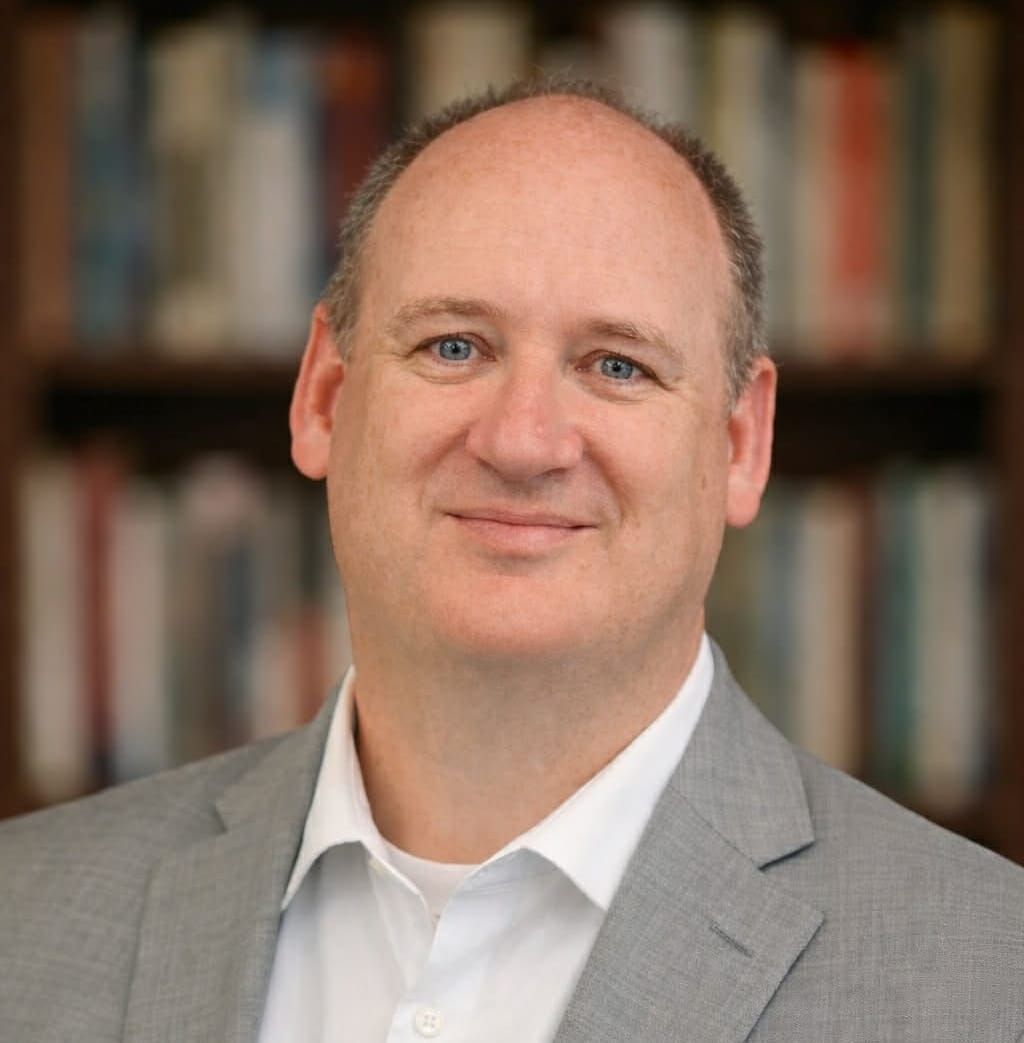
For more than 30 years, Richard Stephens carried a badge and today, he carries a pen. The former sheriff of Carter County never imagined he would become an author. In fact, if you had asked his teachers growing up, they likely would have laughed at the idea. Writing was never part of the plan, and yet, Stephens has now published five books with several more on the way.
Following His Calling from the Start
Stephens grew up in Iowa before moving to Fort Collins, Colorado, but he said Carter County was always home. Both of his parents were raised in the area, attending school in Van Buren before life took them elsewhere.
In 2004, Stephens decided to return. “What better place to raise my daughter than somewhere where grandparents and great-grandparents were?” he said.
He was already a decade into law enforcement when the city of Winona hired him as chief of police. Though that opportunity dissolved after a change in local leadership, Stephens stayed in the region, eventually working with Howell County’s domestic violence enhanced response team before joining the Van Buren Police Department.
Stephens says law enforcement has been something he felt drawn to from a young age, though he does not know why. “I joke about that a lot,” he said. “I remember being relatively young, probably middle school, and all of a sudden, I wanted to become a police officer.”
He remembers seeing officers in their “finely pressed uniform and shined leather” and thinking, “This dude’s cool.” That early admiration eventually led him to serve more than four years in the U.S. Navy as a jet engine mechanic before beginning a three-decade career in policing. “That time that I spent in the military really shaped everything as far as a foundation,” Stephens said.
Stephens said the military gave him stability and reinforced values his parents had already instilled like fair play, the golden rule and the belief that character matters more than status.
“It didn't matter what a person's gender, race, any of that was. [My parents] really instilled that the true test of a person is found within their character,” Stephens said. “The military just kind of added onto that.”
Those principles would shape everything that followed in Stephens’ life.
A Sheriff in the Storm
In April 2011, Stephens answered a knock at his door. On the other side stood the county’s prosecuting attorney with unexpected news. The sitting sheriff had been arrested and Stephens was being appointed interim sheriff.
Stephens said the role of Sherrif was not one he had ever sought, but he stepped into it anyway. “I kind of knew what sheriff would entail, and I didn’t want anything to do with that, but I also felt very strongly that if there was a problem in front of us that I could potentially help with, and if I didn’t, then I really didn’t deserve to wear a badge,” he said.
Three and a half months later a new sheriff was appointed, and Stephens returned to patrol work. “I liked [the new sheriff] a lot and supported him 100% but then, as the next year, year and a half, went by, I kind of realized that we had kind of two polar opposite views of policing.” Stephens said.
In 2012, after this realization, Stephens ran for the office himself. He was elected and took office in 2013, serving two terms before retiring.
Leona said Stephens carried a rare kind of leadership into this role—one marked by humility rather than authority. “He didn’t judge. He treated everyone the same,” she said.
In a position where power can often create distance, she said Stephens remained approachable, never seeing himself as above the people he served. That characteristic built trust among coworkers and those on the other side of the law. “Even people he arrested would come up and say, ‘Hey, Rick,’” she said. “I think that’s rare.”
Stephen's first term, he said, unfolded largely as expected. His second term humbled him. A historic flood devastated Van Buren, destroying the sheriff’s office, jail and courthouse and wiping out much of the town’s businesses. Tornadoes followed. Then came the Covid–19 pandemic. An officer was shot in the line of duty. “There were days I was just tired,” Stephens said. “It took everything I had not to fall into a chasm of darkness.”
From the outside, his wife, Leona, said the job’s toll was often hidden. “He shows no emotion, but you know he has to be feeling these things,” she said, describing the difficulty of watching him carry the weight of the job while continuing to lead.
Stephens said that his faith and family kept him going during these times and so did a conviction that every person—whether struggling with addiction, running a business or preaching from a pulpit—deserved dignity. That perspective would eventually spill onto the pages of his books.
The Turning Point
In 2014, as coverage surrounding the shooting of Michael Brown unfolded in Ferguson, Missouri, Stephens found himself frustrated. “What [the media] was depicting about police officers was totally wrong,” he said.
One night, he told his wife someone needed to write a book explaining why people choose law enforcement and who they really are behind the uniform. His wife, Leona, encouraged him to do it. “If you want it written, you write it,” she said. So he did.
Stephen's first book aimed to humanize officers and explain the weight of their decisions. Halfway through writing it, however, Stephens hit a wall. The manuscript sat unfinished until after his retirement from law enforcement and a new role in behavioral health gave him fresh perspective.
Working alongside crisis intervention teams helped him understand the emotional and psychological toll law enforcement carries. “The book’s main purpose was to help people understand why people get into law enforcement, why they make the decisions they make, but then also the battles that they face emotionally and psychologically,” he said. He published this book and immediately got great responses from the public.
Leona said the public’s response did not surprise her as much as it affirmed what she had always seen in him. “He treated everyone the same. He truly did not have any prejudice against anyone,” she said.
“My wife was like this great book. The only problem is, you didn't tell enough about what to do to fix the problem,” Stephens said. So, Stephens followed up with his second book “Honoring the Calling.”
“In the first book, I didn’t feel like he had given enough information about how first responders deal with it,” she said, pointing to the stigma officers face when seeking help.
Stephens’ goal was to address that stigma in the second book. “I hope it opens the eyes to other first responders and law enforcement that it’s totally normal to feel dark, to feel aggrieved, to feel fear, because you are human,” Stephens said. “Even though the law enforcement officers are first responders, they tend to think of themselves as Superman, trying to help the public. The human body can only deal with so much."
The Sheriff and the Poodle
While Stephens’ early books reveal the weight of the badge, his later ones reveal its heart.
A self-proclaimed “big dog guy,” Stephens once preferred German shepherds. His wife preferred poodles. One day, she sent him a picture of two tiny toy poodles and announced she was bringing one home. He told her to get both. One of them, Brie, chose him as her human.
The image of a tall sheriff carrying a tiny poodle across the street became something of a local legend. "I’m a big guy, a poodle is little and people just loved it. When I'd go to campaign events as the sheriff, and they're like, ‘Where's the poodle?’” Stephens said.
Those moments eventually inspired a children’s series, “The Sheriff and His Poodle,” beginning with a story about friendship. The next installment will focus on grief and loss. Stephens hopes the books provide practical life lessons for young readers in an approachable way.
He has also published collections of his newspaper columns, a book highlighting adventures with his children, and a Bigfoot-themed fiction novel. A faith-based title tentatively called Building Blocks is in the works, exploring how life’s disappointments and detours often reveal purpose only in hindsight.
In many ways, Stephs said writing mirrors his career rooted in service, shaped by hardship and guided by faith and it has become a family effort. After seeing the publishing process firsthand, Leona said she realized, “I could do all of that,” leading the two to start their own publishing company.
That influence has extended to their daughter, who has also stepped into writing at a young age.
For Stephens, writing was never part of the plan—but neither was becoming sheriff. What has remained constant is his willingness to step forward, to serve and to keep going. “Regardless of what you feel your future holds,” he said, “you’ve just got to stay focused and keep moving forward.”